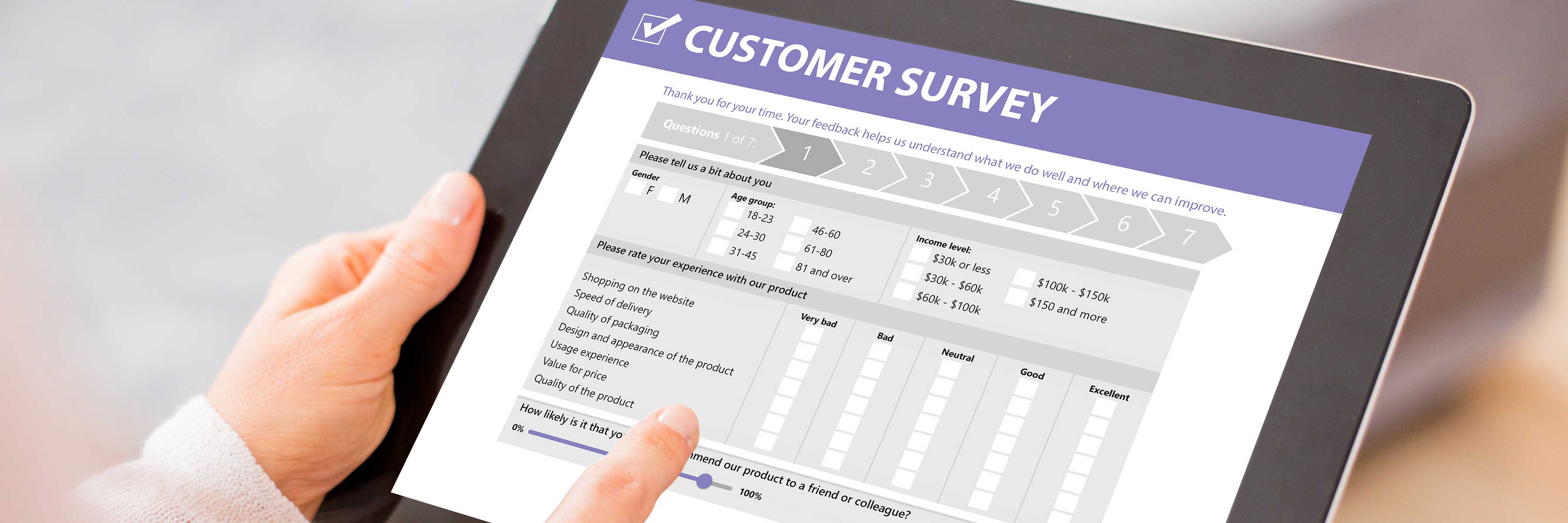










Surveys can help you improve your business by getting to the heart of what your customers like or dislike about the products or services that you're offering. The feedback you get can be invaluable, so it's a good idea to make sure you're maximizing your survey efforts. Here are six tips for doing just that.
1. Know Your Goal for the Survey
Before you direct your customers to complete a survey, you should know its purpose. What are your goals for the survey? Is there a particular problem you're hoping to solve? Are you seeking feedback on a specific item? If you have a clear objective in mind, you can use that to shape the questions and direct feedback. Consumers are more likely to complete a survey that gets to the point and addresses a specific experience they've had with your business.
2. Make Questions Clear, Specific and Unbiased
To help you get right to the point, write questions as clearly as possible, be very specific, and ask them without bias. Don't write them in such a way that tries to steer them in one direction or the other. This is counterintuitive for you, and possibly irritating to the customer.
"Vague, leading, and complicated questions ruin the experience for your respondents, decreasing the likelihood that they’ll participate in future surveys," says Muhammad Talha at ZenDesk.* "Unclear questions may also lead to unreliable responses given in haste."
3. Let Customers Choose How to Answer
Don't set restrictions on how customers can answer the questions you're asking. Make it clear that they can skip questions they'd rather not answer. If the survey is online, make sure the form allows them to move forward without answering each one. Provide different options for taking the survey. Ask if they'd like to do so by email, text message, website, app, paper, or whatever format or channel makes sense.
4. Keep It Brief
People are already dealing with information overload. They're sifting through inboxes full of spam and other unwanted messages, as well as junk mail in their physical mail boxes. They're trying to keep up with the news and various social media platforms, as well as podcasts and the latest streaming shows and movies. People simply don't have as much time as they used to. It's already asking a lot to get them to take your survey, so keep it brief and make it as convenient as possible. This will show them that you respect their time and you probably will get a better response rate.
5. Give Them a Reason to Respond
Lack of time is one reason customers may not be eager to fill out a survey, but they may just be indifferent. Give your customers a reason to respond. Provide some incentive for doing so, such as a discount on their next purchase or a free gift. This will not only increase responses, but it also shows that you value their opinions.
"The use of small incentives can encourage survey responses in certain groups," says Customer Thermometer.** "The emphasis here is on small, rather than large, incentives. This is because incentives can, in some cases, increase self-selection bias. Even so, they are a potent consideration in the survey design arsenal."
6. Follow Up
Follow up with customers who took your survey. If you were successfully able to use the feedback you received, customers can appreciate knowing that they actually made a difference. If specific problems have been addressed, this can make it more enticing for them to do business with you. Either way, let them know that you appreciate their time and effort. This is also another chance to provide a discount or gift as a thank you.
Surveys are a great way to gauge how your customers view your business, so take the time to get your strategy right, and you can reap the benefits of getting genuine feedback to improve your business and encourage repeat customers.
* https://www.zendesk.com/blog/are-customer-surveys-effective/
** https://www.customerthermometer.com/customer-satisfaction/10-rules-customer-survey-design/